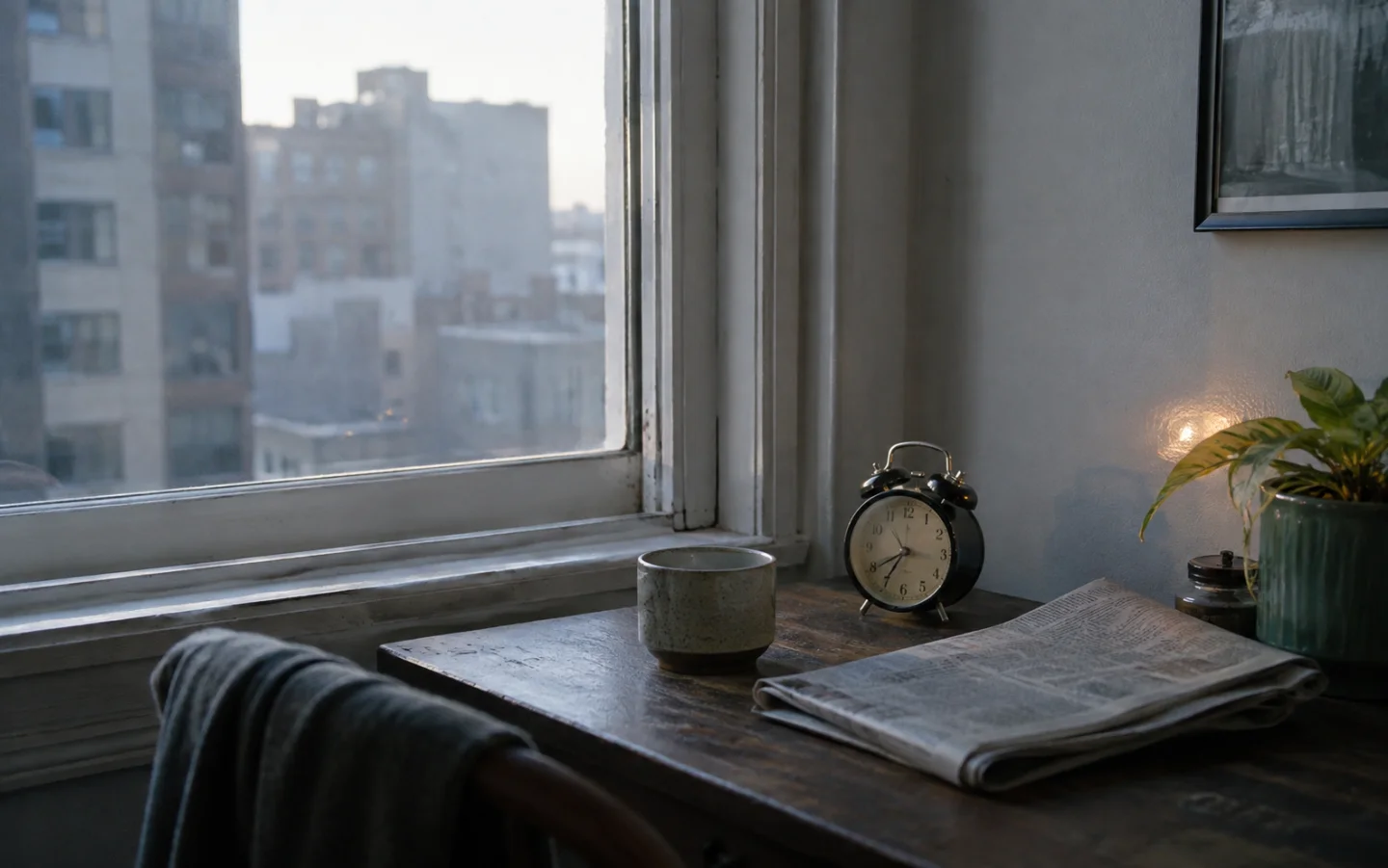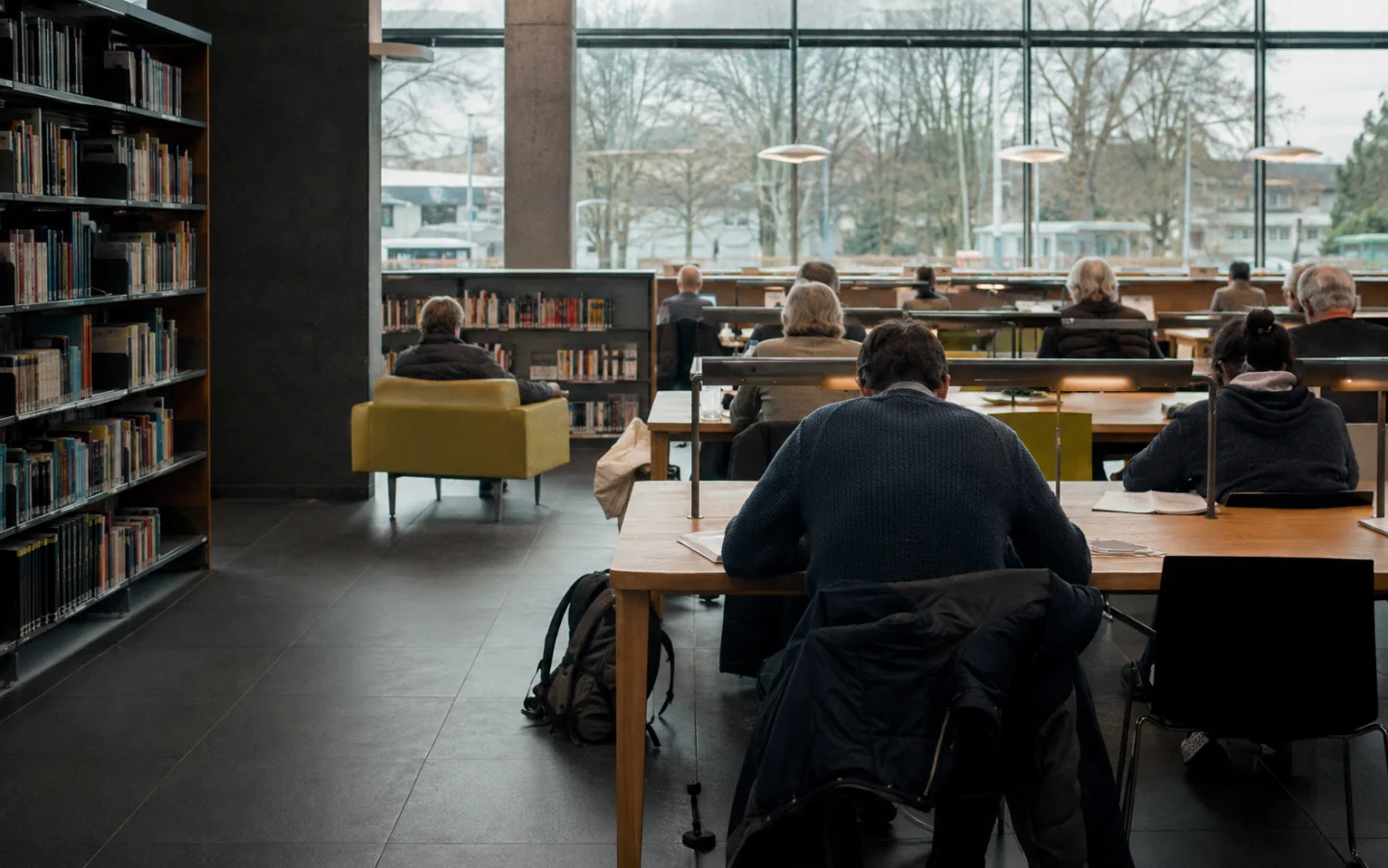
A library is one of the last indoor places where a person can be alone, among others, without having to explain why they are there.
Method note: This essay uses the IFLA-UNESCO Public Library Manifesto as its policy foundation and turns its principles into a practical guide for readers.
A room with no receipt
Most comfortable public interiors now come with a transaction. Cafes offer warmth and a table, but the seat is tied to a purchase. Shops invite browsing, but only within the logic of selling. Libraries make a different promise: enter, stay, read, think or simply wait.
This lack of pressure changes how people share space. A student, a new parent, a job seeker and a retiree can occupy the same long table for completely different reasons. No one has to be the ideal customer.
Useful quiet is not silence
The modern library is rarely silent. Printers start and stop. Children negotiate over picture books. Someone asks for help with a form. The quiet comes from a shared agreement that every person is doing something that deserves a little room.
That atmosphere is difficult to reproduce at home. It offers company without conversation and structure without supervision. For many people, this is the exact amount of social contact that concentration requires.
A service that keeps changing
Books remain central, but the building now holds far more: language groups, repair workshops, internet access, local archives and patient help with difficult systems. The library adapts because the need it serves is larger than any format.
Its most radical feature may also be its oldest one. The door is open, the table is available, and no purchase is expected. In a city full of conditional invitations, that is a rare kind of welcome.
What free access actually includes
The 2022 IFLA-UNESCO Public Library Manifesto describes the public library as a local gateway to knowledge and says access to its buildings and services should in principle be free. The statement matters because access includes more than borrowing a book. It includes a usable room, relevant technology, suitable opening hours and services for people who cannot easily visit.
A good library therefore reduces several barriers at once. It offers information without a subscription, shelter without a purchase and staff assistance without requiring a customer relationship. Those functions are easy to overlook when the library is judged only by circulation numbers.
Use the library beyond the shelves
On your next visit, check the service board before browsing. Many branches offer device help, language practice, local archives, quiet rooms, community events or access to databases that would otherwise require a paid account. Ask a librarian one specific question instead of trying to understand the entire catalog alone.
If the building does not fit your needs, say what is missing. Requests for seating, accessible formats, evening hours and particular materials help staff document community demand. A public service becomes more responsive when residents use it and give concrete feedback.
A fair way to judge a branch
Look beyond architectural polish. Can a wheelchair reach the tables? Are signs readable? Is there somewhere a teenager can work without being treated as a problem? Can a person use a computer without exposing private information to the whole room? These details reveal whether access is practical rather than ceremonial.
Libraries cannot solve every shortage in a city, and staff should not be expected to replace housing, health or social services. Their distinct value is narrower and still powerful: they keep knowledge, tools and shared indoor space available without making purchasing power the price of entry.